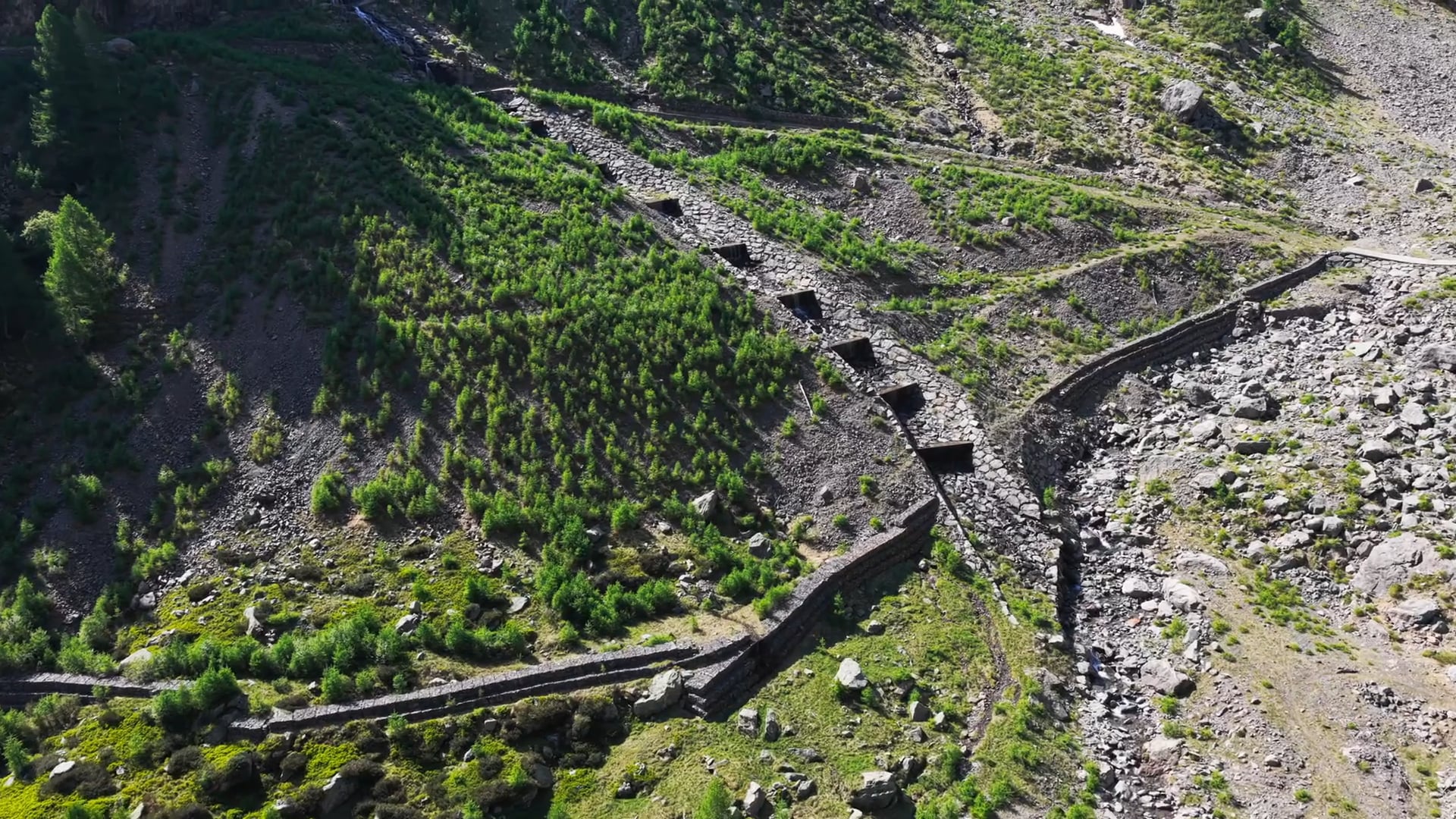
Novazza
Perimeter: 8.26km | Area: 2.72km2
Discovered in 1959 by AGIP Nucleare as part of Italy’s national civil nuclear energy programme, Novazza became the cornerstone of uranium exploration in northern Italy.
The discovery led to the identification and advancement of the broader Lombardy Uranium District, recognised as Italy’s most significant historical uranium region.
Novazza is the most extensively explored uranium project in the district, benefiting from decades of historical drilling, underground development and technical studies. Historical work included more than 100 drill holes and over 6 km of underground workings.
The project offers superior accessibility compared with neighbouring deposits, supported by favourable topography, established infrastructure and existing underground access.
Together with nearby deposits, Novazza forms part of Italy’s largest known historical uranium resource base, providing a strong foundation for modern exploration and resource reassessment.
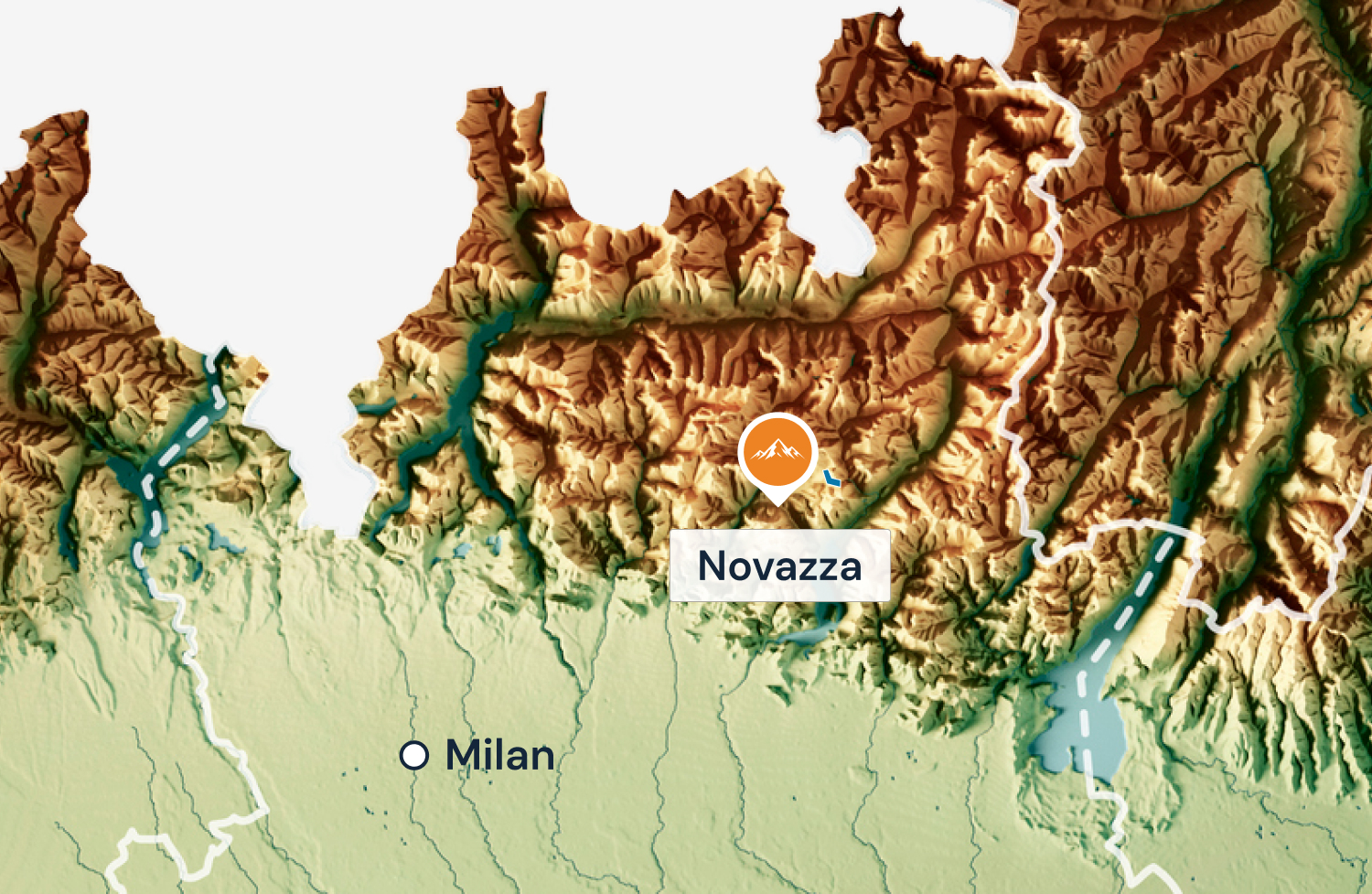
Novazza is the discovery that established Italy’s largest uranium district and remains one of the country’s most advanced historical uranium projects
Project overview
- 2.6 Million lbs U₃O₈Historical Resource
- Historical resource estimate of 2.6 million lbs U₃O₈at an average grade of 0.09% U₃O₈
- Uranium mineralisation comprises pitchblende associated with sphalerite, chalcopyrite and galena
- Hosted within Permian rhyolite ignimbrite
- Historical drilling and underground development completed
- Represents the second historical uranium deposit within the Lombardy Project
- Potential for modern resource evaluation and exploration
Proposed exploration programme
- Environmental Impact Assessment (EIA/VIA) submitted in April 2026 in support of the Exploration Permit application
- Approximately 11,000 metres of underground diamond drilling proposed during the term of the Exploration Permit
- Validation and resource definition drilling targeting known mineralised zones
- Infill drilling designed to improve geological continuity and confidence
- Channel sampling of mineralised levels and underground crosscuts
- Radiometric logging of accessible historical drill holes and underground workings
- Designed to validate historical exploration results and improve understanding of known uranium mineralisation